Start with the vehicle manufacturer specification. A tyre that physically fits the wheel may still have the wrong load rating, speed capability or construction for your car.
Read the full tyre size and rating
A marking such as 225/45 R18 95Y shows width, profile, wheel diameter, load index and speed rating. Match the approved specification in the owner manual, door sticker or manufacturer guidance. SUVs and electric vehicles may need higher load capacity.
Choose for your actual driving
Daily city driving, long motorway journeys, heavy loads and performance use place different demands on a tyre. Premium tyres can offer advantages in braking, noise and handling, while reputable value options may suit moderate everyday use. Compare the full specification, not only price.
Heat increases tyre pressure during driving and can accelerate deterioration. Always set cold pressure to the vehicle manufacturer recommendation, not the maximum number printed on the tyre sidewall.
Check manufacturing date and condition
New-looking tread does not always mean a young tyre. Read the date code and inspect for storage damage, cracking or deformation. When buying, ask about the production date and warranty terms.
Replace tyres in suitable pairs or sets
Large differences in tread, brand or construction across the same axle can affect stability. Four-wheel-drive systems may also have limits on acceptable tread difference. Follow the vehicle manufacturer guidance and professional advice.
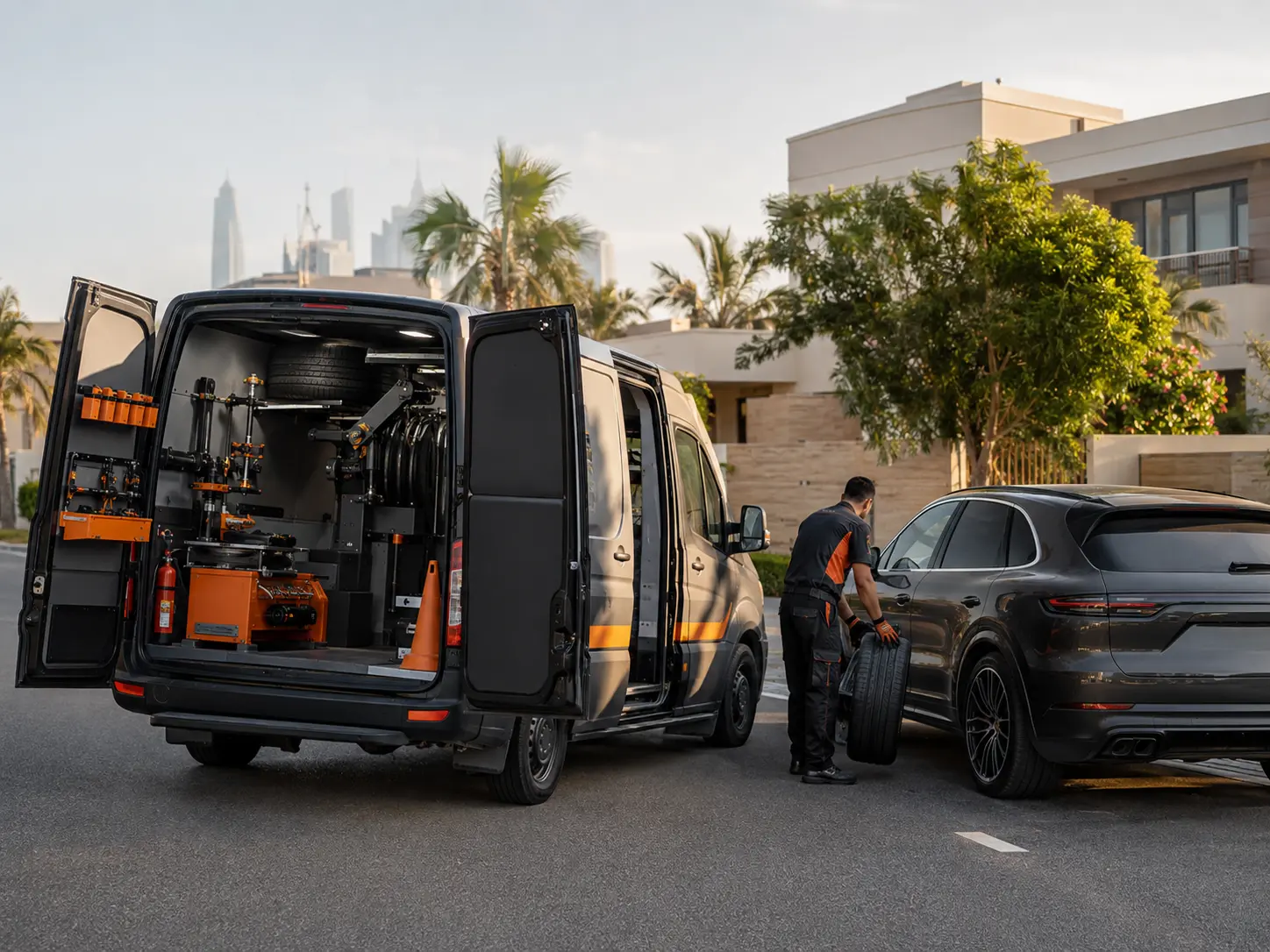
Confirm availability before mobile fitting
Send the exact tyre size, vehicle details and preferred brand range before booking. The mobile team can then confirm suitable stock, pricing and whether balancing or additional checks should be included.